
Turning KPI Data into Action: Real Operational Insights from Lafarge
At Lafarge, digitalization of production processes was never treated as an end, but as a practical tool to improve operational efficiency, consistency, and decision-making. In this interview, Trevor Warren — former Manufacturing Director for Central Europe and Russia at Lafarge — shares his perspective on the implementation of TMS, the measurable results achieved, and the role of data in managing large-scale industrial operations.
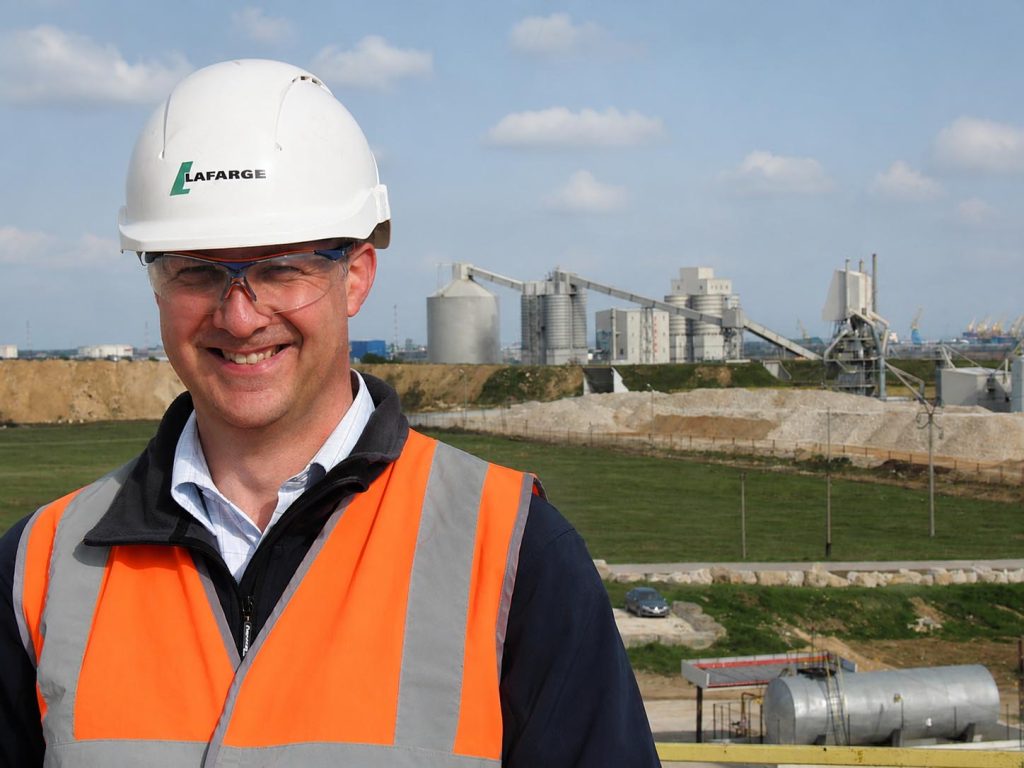
What exact position did you hold at Lafarge, and which countries were you responsible for?
Trevor Warren: In February 2008 I moved into the role of Technical Development Director – North & Central Europe, which was a newly established region for Lafarge, having aggregate and concrete operations in Poland, Romania, Ukraine, and Hungary. My focus was to roll out and embed the Lafarge ‘Rock’ business model into the aggregate sites that would drive performance improvement. In 2009 this changed to Manufacturing Director, which aligned with the same role for the other Lafarge regions worldwide, and put me into a peer group experienced in the role, collaborating through the Aggregates Performance team in Paris.
In late 2010, Lafarge changed from regional product led management teams, to country management, with country CEOs managing all operations. I had to choose where to work, and as I had been involved in the due diligence and recent integration of aggregate operations in Russia, I became Manufacturing Director here until I returned to work in UK at the end of 2012.
When and under what circumstances did you first encounter the TMS system, and what feedback did you receive from its users?
T.W.: In 2009 the aggregates management team in Poland made me aware of TMS and we reviewed the technical details and commercial offer at a performance review meeting ahead of compiling the budget for 2010. We were setting targets for KPIs, and I was very interested in looking at any system which could give more accurate information on fuel usage and up time.
My previous experience had been with OEM provided equipment, which meant a number of different reports if you had a mixed HME fleet, and manual reporting if Belaz trucks and electric-rope shovels were in use – very much the case at that point for Poland.
TMS offered a system that could capture data from most items, giving one report for the site, and the pricing was very attractive in comparison to OEM equipment. So, we ran a trial at several sites in Poland which quickly gave comprehensive and reliable data.
What role did you personally play in the evaluation, recommendation, or decision to implement TMS?
T.W.: I evaluated the proposal from TMS and then agreed to the trial installation, monitoring progress and the data outputs. There were some quick wins in terms of performance and on that basis, I agreed that it would be included in the CAPEX budget for full fleet implementation.
Was the implementation of TMS in Romania a direct result of the experience and recommendations from Poland?
T.W.: Yes, it was, I shared the quick win information with the management team in Romania, and they requested a proposal from TMS, which quickly progressed to a trial and then full fleet deployment within 6 months.
From your regional perspective, which business outcomes of the TMS implementation were the most visible — particularly in terms of cost control, operational efficiency, and data transparency?
T.W.: Firstly, accurate, reliable data for each plant item in the fleet, and from this being able to compare the performance of different plant items in terms of fuel consumption and uptime. This allows daily review at site level leading to performance optimisation. At regional level, it allowed analysis of the data at country level comparison of plant type/OEM which could feed into performance improvement targets, sharing of best practises, and decisions on CAPEX replacement or refurbishment. Having the data available directly at site/Area/Regional level in a single report that was formatted to end user requirements and very easy to access was important.
Were these isolated, local successes, or rather a clear signal that the solution could be scaled country by country?
T.W.: Absolutely a clear signal that this solution could quickly be implemented in each country and the payback less than a year.
What role did the Short Interval Control methodology play at Lafarge, and why was it so important for maintaining operational discipline?
T.W.: Short Interval control was a key part of using KPI data to improve performance. In the most basic form, it means having a clear understanding of process capacity and setting clear targets which are checked and reported on every 2 hours – allowing interventions, where necessary; to recover performance before then end of a shift. This is Active management and each person needs to be trained and aware of their roles and responsibilities. Each shift is reviewed and lessons learned, or actions taken for the next shift.
Implementation of TMS meant detailed, accurate data readily available which allowed us to set targets and review every hour, further improving the SIC, and delivering continual incremental improvements in decision making which quickly became visible as reduced litres/tonne and improved uptime.
What were the biggest challenges related to measuring KPIs in short time intervals (e.g. every two hours) before the implementation of systems such as TMS?
T.W.: Belt weigher tph on the few main conveyors where they were installed, and load counts, were the only readily available data to review. Even the fuel data from individual CAT/Volvo/Komatsu machines would only be downloaded daily or weekly, so it would require people with eyes on loading points and tipping points and adding numbers and comments into spreadsheets or hard copies. Quality supervision, but, particularly on big sites, it’s hard to always be in the right place at the right time, so you’re likely to be more reactive.
Looking back, what was the key moment that built trust in TMS, and why did you decide to take on the role of TMS Brand Ambassador in the United Kingdom and Ireland?
T.W.: Remembering back to 2009, discussions were open, the offer was fair and seemed win-win, which is always good business, and at every stage the TMS equipment and support delivered on what was promised, on what we hoped for, and we quickly saw tangible benefits with a rapid return on investment.
When TMS contacted me in November 2024, to discuss the possibility, and took me through the hugely upgraded TMS 4.0 with GPS, fixed plant energy management, the electronic belt weighers that have been developed, user defined reporting formats, and AI integration, I was blown away by the product. But more importantly, the people that are in the company are professional, hugely knowledgeable, enthusiastic and eager to listen and provide solutions. As such, it was an easy decision to make, and I am proud to work on behalf of TMS.
At TMS, we already use elements of AI and advanced analytics to work with operational and KPI data. We treat them as decision-support tools, not as an end in themselves.
From your perspective, how will the AI approach perform in a real operational environment, and where do you see its greatest value?
T.W.: I have sat in many meetings and intervened when colleagues are certain that KPIs are indicating the next course of action, pointing out that KPIs never give you answers, but show you which are the right questions to ask. I think that AI will do this in far greater detail.
Instead of looking at hourly belt weigher totals or complete cycle times, it can compare the profile of current draw and tph for a conveyor to that which resulted in a belt tracking over, or blocked chute incident; or look at each sector of a load/haul cycle against targets set for each element and if the truck is being held at the crusher before tipping – in either scenario send a message to the operator or supervisor to investigate in a targeted way. This allows more active, preventative management and more efficient use of human time, knowledge and experience.
Interview conducted by Damian Wiercioch
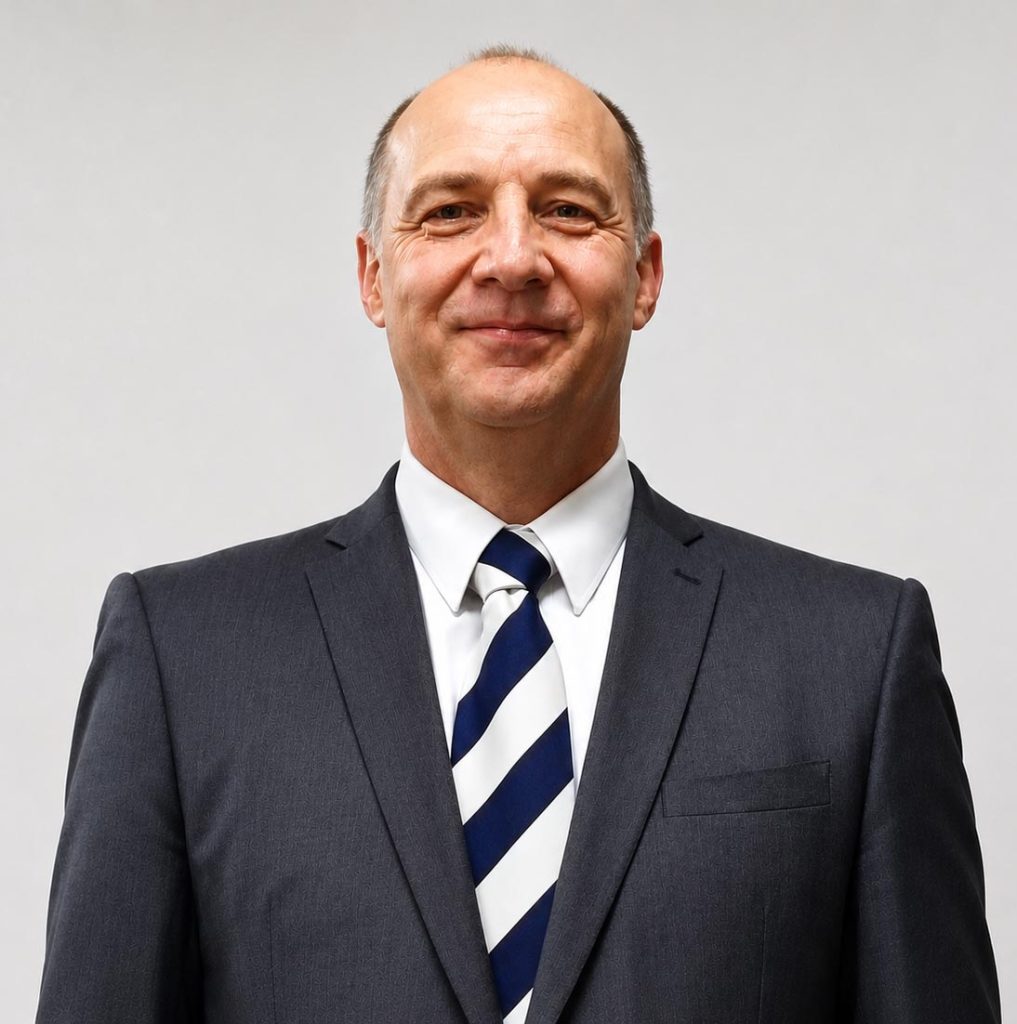
Trevor Warren – former Manufacturing Director for Central Europe and Russia at Lafarge, responsible for operational performance, KPI analysis, and continuous improvement of production processes across multiple countries.