

In manufacturing plants where several independent technological processes operate simultaneously, efficiency does not depend solely on machine capacity or nominal production capabilities.
In practice, three factors determine real performance:
- equipment availability,
- actual utilization of working time,
- control of energy consumption.
In the analyzed production model, operations are carried out at a strictly defined daily tonnage level. The manufacturing structure is multi-stage, and internal logistics supported by mobile machines operate between the individual stages.
It is within this structure that the greatest management challenge arises: the lack of full and consistent visibility of the process.
Where Do Losses Really Occur?
In the first process, production proceeds through the following stages:
dosing → crushing and separation → pressing → storage.
In the second:
loading → mixing → pressing → drying → screening → storage and customer loading.
In both cases, the key problem is not the technology itself, but the lack of clear answers to fundamental operational questions:
- how much time the equipment operates under load,
- how much time it runs without load,
- how much time it remains idle,
- what causes production stoppages,
- how electricity consumption is distributed across process stages.
Without such a breakdown, the final result says nothing about the operational parameters of the process.

Availability and Time Utilization as the First Step Toward Control
The primary objective of implementation is not to increase production but to organize measurement of:
- availability,
- time utilization,
- causes of interruptions and stoppages.
In the first process, particular emphasis is placed on analyzing the operation of feeders and presses, distinguishing between operation under load and operation without load.
In the second process, mixers, presses, and screens are analyzed in a similar way—each device separately, with a clear distinction between operating time and downtime.
Only this level of detail allows the transition from a simple “running / not running” view to a real analysis of efficiency.
Electricity – the Main Cost Carrier
Within the plant’s energy structure, electricity is the dominant energy carrier.
Natural gas used in the drying stage does not have dedicated metering, and measuring fuel consumption in auxiliary processes was considered economically unjustified at the initial stage.
For this reason, energy consumption analysis focuses on:
- electricity used by stationary machines,
- electricity drawn from charging stations for forklift trucks.
This approach is pragmatic: measure what has the greatest impact on costs and what can be analyzed reliably.
Internal Logistics as Part of the Process
In both processes, operations between stages are carried out by electric forklifts.
Without data on their actual operation, it is impossible to determine:
- waiting times between stages,
- potential bottlenecks,
- synchronization between processes.
Including internal logistics in availability and energy consumption analysis allows it to be treated as an integral part of the production process rather than merely a supporting activity.
Production in Tons – Only Where Data Is Reliable
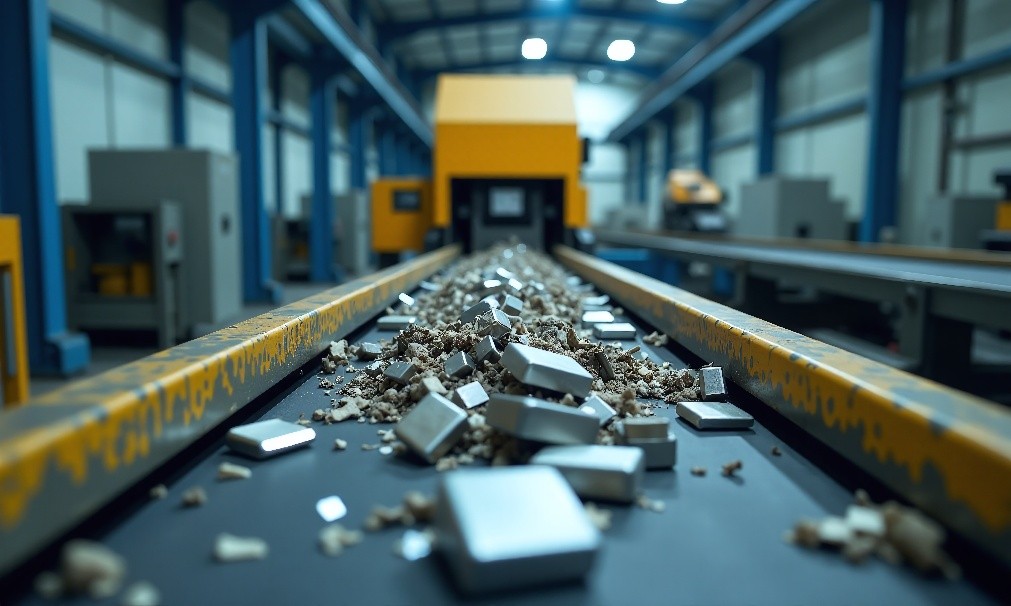
In the first process, full calculation of production in tons depends on installing measurement on the conveyor using a belt scale.
Without this measurement, it is still possible to optimize time utilization and availability, but Key Performance Indicators (KPIs) related to production output in tons remain limited.
This distinction is important from a business perspective:
first organize the data foundation, and only then build productivity indicators related to production volume.
Daily Analysis Instead of Post-Event Reaction
The requirements include preparing a dedicated daily report for each process, enabling ongoing analysis of production performance.
Such a reporting model shortens the distance between operational events and management decisions.
Summary: From Time Control to Performance Control
In an environment where production processes operate with defined output targets, achieving the target volume alone is not sufficient. It is equally important to understand how that result was achieved.
Organizing:
- machine availability,
- time utilization,
- electricity consumption,
- causes of interruptions and stoppages,
creates the foundation for further optimization.
Full visibility of the process is not an optional enhancement to production.
It is a prerequisite for stable, predictable, and economically justified operational efficiency.